OEM & ODM · PRODUCT DEVELOPMENT
How to Develop Custom Pet Apparel Without a Tech Pack
You can start a custom dog jacket project with reference images, a physical sample or a written idea. A useful first brief explains the intended use, fit, features, quantity and timing. The next step is to turn that brief into agreed materials, measurements and construction details before approving production.
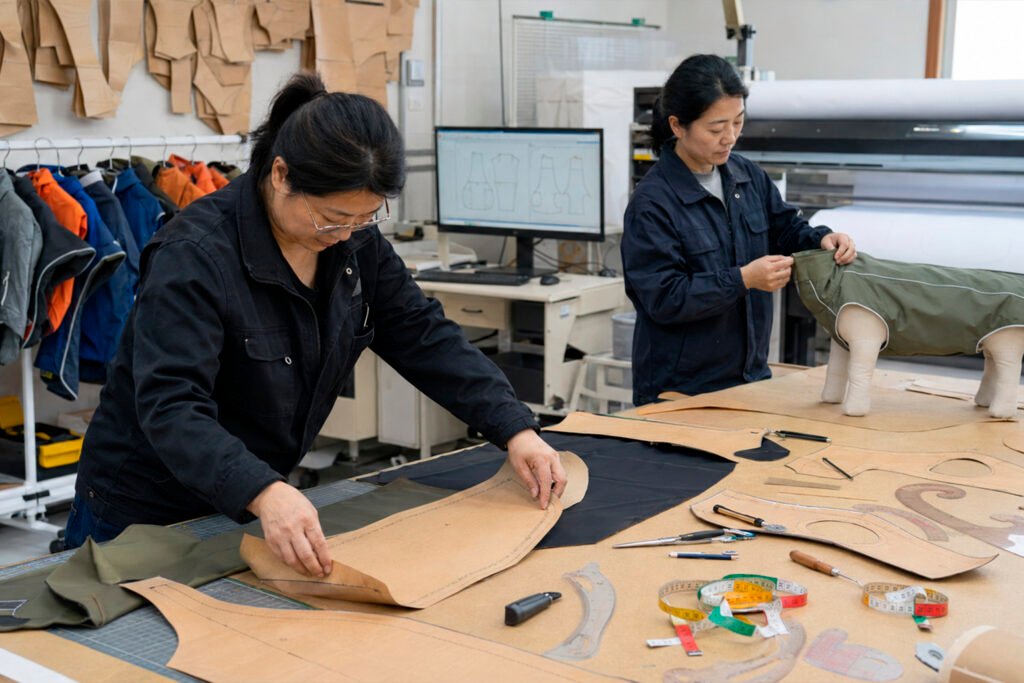
What is a tech pack for pet apparel?
A tech pack is the collection of technical instructions used to develop and reproduce a product. It usually includes drawings, measurement points, material and trim details, construction instructions and revision records. Techpacker’s guide to tech packs describes these core components in apparel development.
For a dog jacket, the documentation also needs to explain body coverage, adjustment settings, leg clearance and any harness-access opening. A photograph may show the general shape but leave the lining, closure construction or measurement method uncertain. List those uncertainties early so they can be resolved through development.
1. Prepare a minimum product brief before contacting a factory
Begin with the decisions you can make now. You do not need professional drawing software to explain your priorities. A short document with labelled pictures, measurements and clear questions can make the first conversation more useful.
| Information | What to send | Why it matters |
|---|---|---|
| Intended use | City walks, outdoor activity, wet weather or winter layering | Guides material, coverage and construction choices |
| Product direction | Labelled front, side and back reference images, or a physical sample | Shows the shape and features you want to discuss |
| Target fit | Body measurements, intended sizes and relevant body shapes | Provides a starting point for pattern development |
| Features | Adjustment, closures, harness access, reflective details and branding | Identifies the functional requirements |
| Order plan | Total quantity, estimated size/color split and target cost range | Supports a more specific sourcing and quotation discussion |
| Timing and market | Desired sample date, launch date and destination market | Helps identify testing, labeling and scheduling requirements |
Mark a detail as “open for recommendation” when you need help choosing it. This is more useful than giving a firm specification you do not understand. Separate essential features from optional features so the development team can discuss trade-offs.
2. Explain what each reference image means
Add notes directly beside the relevant feature: “similar back coverage,” “adjustable belly closure,” or “harness access in this area.” State what should change as well. Several unlabelled images can suggest conflicting requirements, such as a close-fitting silhouette combined with a bulky insulated lining.
A physical sample can help communicate shape, hand feel and workmanship. Record its dimensions and identify which features are only references. Use your own or authorized design material, and agree an original specification for your brand rather than asking for another brand’s logo or identity to be reproduced.
3. Turn open questions into an agreed specification
Ask the development partner to list the information still required and the decisions they can propose. Confirm the scope and cost of pet apparel product development, pattern making and sampling before work starts. Record who approves materials and who maintains the current specification.
- Materials: confirm the shell, lining, insulation if applicable, color references and required performance evidence.
- Fit: distinguish dog body measurements from finished-garment dimensions, define ease and record the adjustment position used for measurement.
- Construction: identify seams, closures, hems, attachment points and any weatherproofing details.
- Branding: confirm artwork files, placement, dimensions, labels and packaging requirements.
- Quality: define measurement tolerances and the checks used to accept the sample and finished goods.
Our dog jacket size-chart guide explains the difference between body charts and factory measurement sheets. For a rain jacket, use the waterproof dog jacket development guide to organize the material and construction discussion.
4. Give the first sample a defined purpose
The first sample may be intended to check a pattern, fit, construction or the overall product. Agree which materials will be used and whether any components are temporary substitutes. A substitute-fabric fitting sample should not be treated as proof of final material performance.
Evaluate the sample against a written checklist. Record the fitting dog’s measurements, photograph the garment from several angles and observe normal movement. Check the closure overlap, neck opening, front-leg clearance, belly coverage and the intended harness arrangement.
Consolidate feedback into one dated revision document. Replace “make it better fitting” with a defined change, such as a revised measurement target, an adjustment-position change or a marked pattern correction. Confirm whether the revision affects other sizes, trims or cost before requesting the next sample. See our sampling preparation checklist for the wider approval process.
5. Understand what makes the quotation provisional
At the idea stage, pricing depends on assumptions. Ask which material, construction, quantity and size mix the estimate includes. A more detailed quotation becomes possible when the development decisions are confirmed.
Discuss sampling and pattern charges, included revision rounds, material minimums, branding setup, testing and packaging separately. Ask whether the order minimum applies per style, color or total order. If you require a launch date, work backwards through sample approval, sourcing, production, inspection and shipping rather than treating sample timing as the complete project lead time.
6. Approve one production reference before placing the bulk order
Keep the approved sample and specification linked by style code and revision number. Confirm the material list, colorways, measurement sheet, size grading, closure and artwork placement, care instructions, packaging and quality criteria. Record any remaining exceptions explicitly.
Check that the purchase order refers to this same version. If a material or feature changes after approval, document the change and decide whether it needs another sample or test. This prevents the production team from having to choose between inconsistent instructions.
A first-enquiry template you can copy
Frequently asked questions
Can YHO review an idea without a tech pack?
Yes. Send reference images or a sample, target measurements, intended use and quantity. YHO can review the missing information and discuss the required development and sampling scope.
Is a product photo enough for an accurate quotation?
A photo can start the conversation, but it may leave materials, measurements, construction and branding unclear. Ask which assumptions an initial estimate includes and confirm them before relying on a final quotation.
Can the factory help prepare the specification?
Discuss this as part of the development scope. Agree who prepares drawings, measurements and material records, who approves them and what the service includes.
How many sample rounds will be needed?
The number depends on the design, initial information, material availability and fit changes. Define the purpose of each sample and consolidate feedback before requesting revisions.
What is the next step after sample approval?
Confirm the production specification, size/color breakdown, quality requirements, packaging and schedule, then make sure the purchase order references the approved version.