PET APPAREL · SAMPLE APPROVAL · PRODUCTION PLANNING
Dog Jacket Pre-Production Sample Approval Checklist
Before approving a custom dog jacket for bulk production, review the sample against a written specification. Confirm materials, measurements, fit, construction, branding and packaging, and record every accepted detail and unresolved issue.
1. Identify exactly which sample you are reviewing
Start the approval record with the style code, sample date, sample size, color and specification revision. Label photographs with the same details. This helps the buyer and factory discuss the same physical garment when several versions are in circulation.
Ask which sample materials and components match the intended bulk order and which are substitutes. A sample with temporary fabric, a different zipper or an unfinished logo cannot confirm those final details. List the differences and agree how each will be reviewed before production.
Keep the reference sample, measurement sheet and revision notes together. If your project started from photographs or a sketch, use our guide to developing pet apparel without a tech pack to organize the missing specifications.
2. Check the shell, lining, trims and construction
Compare the sample with the agreed material references. Review shell and lining appearance, hand feel, color, insulation where specified, and the selected closures, webbing and reflective details. Record component codes or approved references where available rather than relying only on a photograph.
Inspect the garment inside and outside. Review seam placement, finishing, binding, reinforcement, lining attachment and closure operation against the agreed construction. Pay attention to areas near the neck, chest, front legs and belly where the design needs to accommodate movement.
For weather-protection products, separate appearance approval from performance verification. A sample photo or water-beading demonstration does not establish a finished garment’s waterproof rating. Agree the required test method, scope and acceptance criteria with the supplier or testing provider. Our waterproof dog jacket OEM guide explains the questions to include in the product brief.
3. Review garment measurements and practical fit
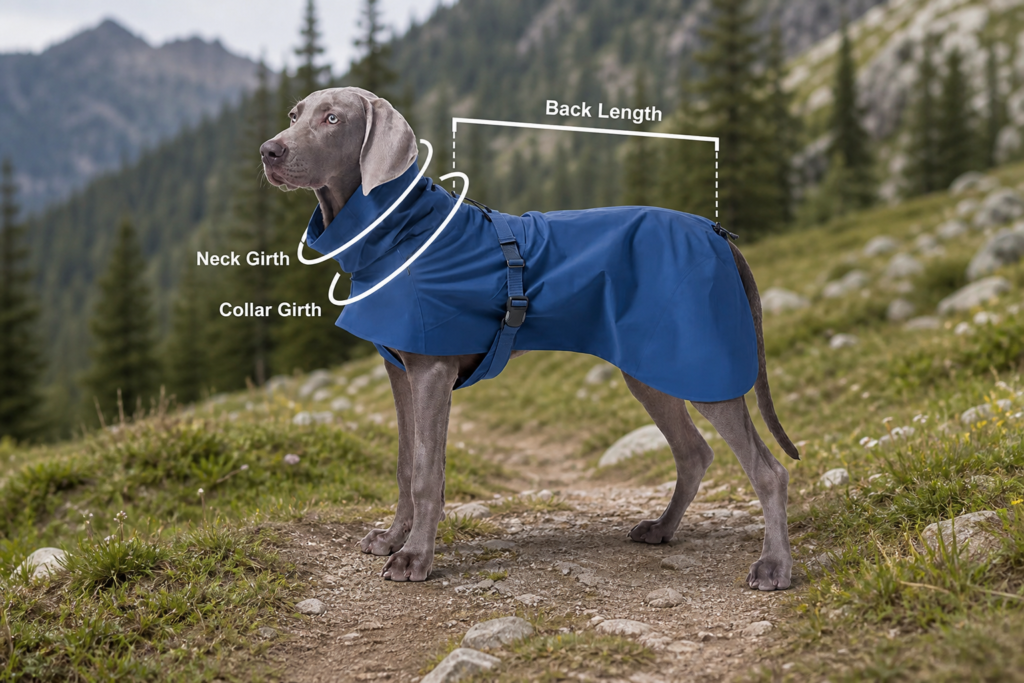
Measure the sample using the agreed points of measurement and record the actual values beside the specification and tolerance. Confirm how each measurement is taken, including whether closures are fastened and adjustable components are relaxed or extended. Do not compare measurements taken by different methods as if they were equivalent.
Keep body measurements separate from finished-garment measurements. Check that the intended size chart and garment specification describe the same fit goal. See our dog jacket size-chart guide for planning the size range.
Where appropriate, arrange a supervised fit review on dogs representative of the intended size and body shape. Observe standing, walking and comfortable movement; check coverage, leg clearance, closure positioning and access to any specified leash or harness opening. Stop the fitting if the dog shows discomfort. Record the sample size and relevant body measurements with the observations.
Approval of one sample size does not confirm every size in the range. Agree which additional sizes or body-shape variations need review, and distinguish a fit decision from approval of the full size specification.
4. Use a written pre-production sample checklist
Assign each item a result such as “approved,” “revise” or “pending evidence.” Add the reviewer, date and supporting reference. An unresolved item should have a clear owner and next step.
| Review area | What to confirm | What to record |
|---|---|---|
| Sample identity | Style, version, size and color | Sample label and specification revision |
| Materials and trims | Approved shell, lining, insulation and components | References and any substitutions |
| Measurements | Agreed measurement method and tolerances | Actual measurements and differences |
| Fit and function | Movement, coverage, adjustments and openings | Fit observations and labelled photos |
| Construction | Seams, reinforcement, closures and finishing | Accepted details and correction notes |
| Performance evidence | Required tests and agreed acceptance criteria | Applicable reports or pending actions |
| Branding and labels | Artwork, placement, dimensions and approved text | Artwork revision and label references |
| Packaging | Tags, bags, barcodes and carton instructions | Packing specification and references |
5. Confirm logos, labels and packaging separately
Check logo dimensions, placement, colors and application method against the approved artwork. Review labels and hangtags for spelling, size designation and the agreed care information. Have the appropriate person review destination-market labelling requirements; visual approval alone does not establish compliance.
If retail packaging is part of the order, review its material, layout, barcode information and packing instructions. Confirm whether the sample includes final packaging or whether a separate packaging approval is required. Keep packaging costs and scope aligned with the written offer; our custom dog jacket cost guide provides a quotation comparison checklist.
6. Write a clear approval or revision decision
Send one consolidated review with numbered comments and annotated photographs. For each correction, state the current issue, required outcome and reference document. Avoid conflicting instructions across messages and attachments.
A useful approval record can follow this structure:
- Reference: style code, sample version, size/color and specification revision.
- Decision: approved for a stated scope, revisions required, or pending further evidence.
- Open items: each issue, responsible person and required confirmation.
- Production reference: the sample and documents both parties will retain.
- Sign-off: reviewer, date and supplier acknowledgement.
If accepting a sample subject to corrections, spell out whether a revised sample, photographs, measurements or other evidence must be approved before the affected work proceeds. Confirm any timing or quotation impact. Keep a dated record of later substitutions or design changes.
7. Keep sample approval separate from bulk inspection
The approved sample defines the intended product; it does not show that every bulk unit matches it. Agree the production checks and final inspection scope separately, using the approved sample and specification as references. Confirm how discrepancies will be reported and resolved before shipment.
For an earlier-stage project, our pre-sampling development checklist covers the information to prepare before the first sample is made.
Frequently asked questions
What is a pre-production sample for a dog jacket?
It is a sample used to review the intended production specification before bulk manufacture. Agree its purpose with the supplier and record any materials, trims or details that still differ from the planned order.
Can I approve a dog jacket sample from photos?
Photos can help review appearance and visible corrections, but they do not establish physical fit, feel, measurements or performance. Decide which items require a physical sample, measurement record or test evidence.
Does one approved size cover the full size range?
It does not demonstrate the fit of every size. Agree the size specification and any additional sample sizes needed for review before confirming the range.
What happens if the factory proposes a material change after approval?
Ask for the proposed specification and its effect on appearance, fit, function, cost and timing. Decide what additional sample review or testing is needed, and document the revised approval before the affected production proceeds.
Does sample approval replace final inspection?
No. Sample approval records the intended product. Bulk inspection checks the produced goods against the agreed references and inspection criteria.