PRODUCT SELECTION · CUSTOM DOG OUTERWEAR
Dog Raincoat vs. Softshell vs. Insulated Coat: A Guide for Pet Brands
Start with the weather and activity your collection is designed for. A raincoat prioritizes rain coverage, a softshell jacket suits active use where stretch and wind protection matter, and an insulated coat adds warmth for cold conditions. That choice tells your factory what to build and what to check in the first sample.
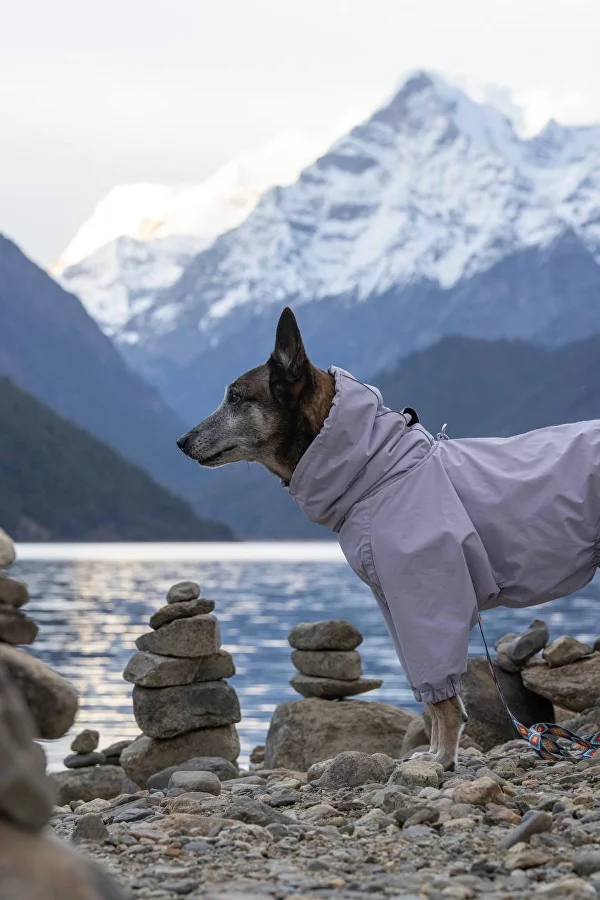
Compare the three dog outerwear styles
Choose a primary job first. Then set requirements for chest and belly coverage, front-leg movement and any openings for a collar or harness.
| Style | Best starting use | Build priorities | First sample check |
|---|---|---|---|
| Dog raincoat | Wet-weather walks and muddy outings | Shell, coverage, seam treatment and protection at openings | Look for water entry at seams, closures and the harness opening. Check stride with the jacket fastened. |
| Softshell dog jacket | Active walks and hikes in cool or windy conditions | Stretch direction, shoulder shaping, smooth edges and abrasion-prone areas | Check front-leg reach and whether the garment shifts or binds when the dog turns or sits. |
| Insulated dog coat | Cold-weather walks and lower-activity outings | Fill, lining, coverage and ease over the thicker construction | Check that the closure lies flat, the lining moves comfortably and the fit works with the intended harness or layers. |
Dog raincoat for wet-weather coverage
Choose a cape-style silhouette when fast dressing and back coverage are priorities. A fuller suit can cover more of the belly and legs, but cuffs and leg openings add fit points to review. Compare the two shapes in the YHO product catalog.
If you intend to market the finished jacket as waterproof, agree with the factory on the evidence needed for that claim. Review the shell, stitching, seam treatment, neck, belly closure and leash access as a complete garment. Use the waterproof dog jacket OEM guide to prepare the construction and testing questions.
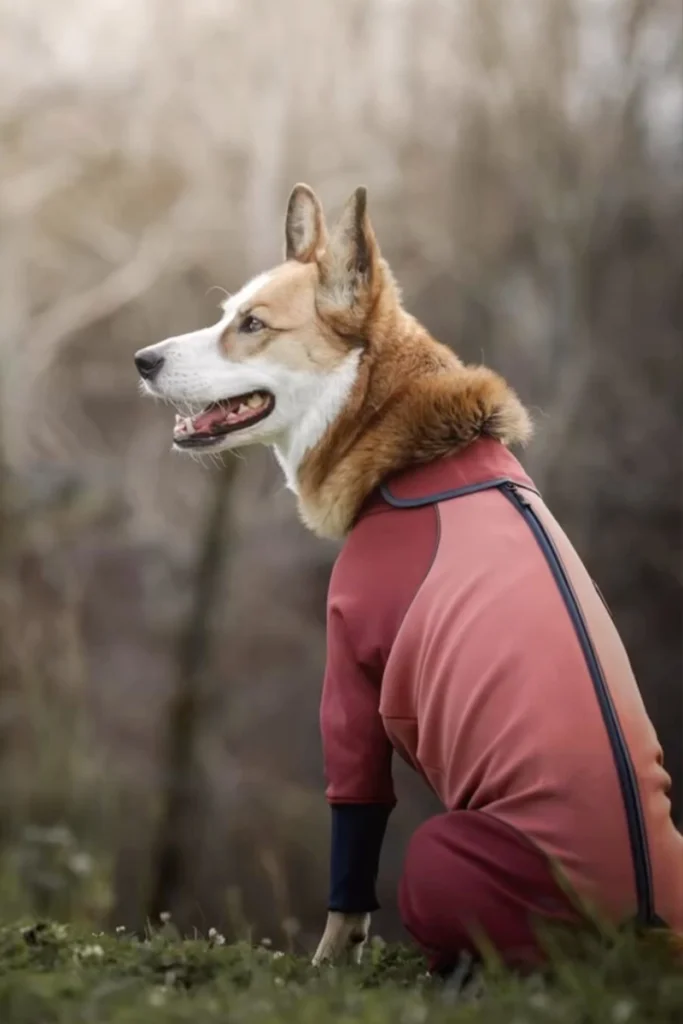
Softshell dog jacket for active use
For a hiking or everyday outdoor range, ask the factory to show the fabric’s direction of stretch on the pattern. Check the shoulder, chest and front-leg edges on a moving dog. If a harness goes underneath, fit the sample with the intended harness and inspect the leash opening with the leash attached.
Specify the rain exposure you expect. Softshell fabrics and constructions vary. Check the selected shell and finished garment against any water-resistance claim you plan to make.
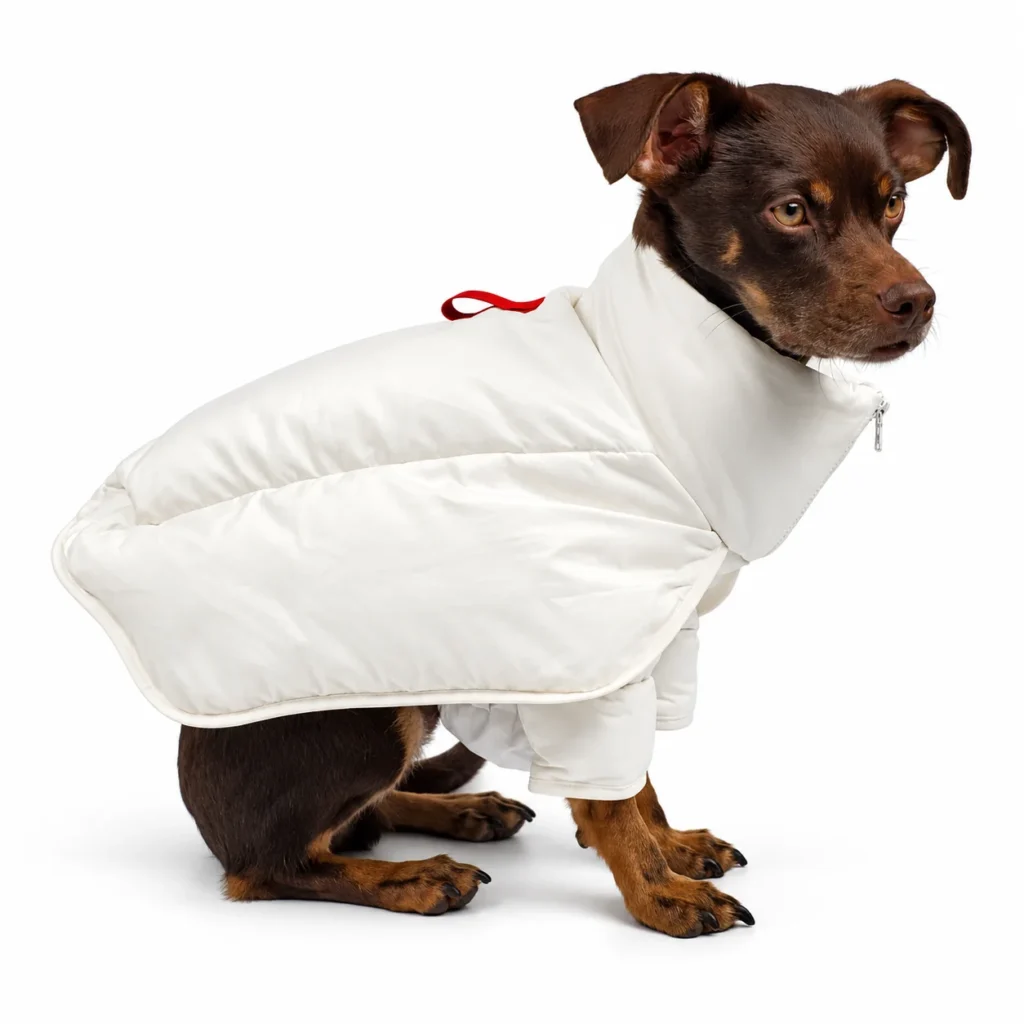
Insulated dog coat for cold-weather coverage
Decide which parts of the body need coverage and where extra thickness would affect movement. Ask the factory for fill and lining options, and compare samples at the neck, chest and belly. Review how the quilting or stitching holds the fill in place and how easily the coat closes around the intended layers.
Use the dog jacket size chart guide to distinguish body measurements from finished-garment measurements. A padded coat may need different garment dimensions from a thin shell for the same body measurements. Confirm them on the sample.
What to send with your first sample request
- Use case: expected rain, wind or cold, activity level and how long the garment will typically be worn.
- Silhouette: a reference photo, desired back and belly coverage, and the position of closures and harness access.
- Fit: target size range and sample sizes, with notes on body shape and any harness or layers worn underneath.
- Approval: the fit, movement, finish and weather-protection checks the sample must pass before you order.
If you have photos and a use case, use the guide to starting without a tech pack to turn them into a brief. Once a sample is ready, use the pre-production approval checklist to record decisions.