WINTER OUTERWEAR · FIT · HARNESS COMPATIBILITY
Winter Dog Jacket Design: Fit, Warmth and Harness Compatibility
Snow, movement and harness use put different demands on a dog jacket. For a pet brand developing an active winter style, the first sample should bring coverage, material thickness and freedom of movement together. This guide turns a snowy outdoor reference into a practical development brief.
Start with the activity and wearing conditions
A jacket for active snowy walks and a padded coat for slower outings can need different coverage and material combinations. Describe the expected wind, moisture, activity and layers in the brief. Ask the factory to identify the assumptions behind its proposed shell, lining and fill.
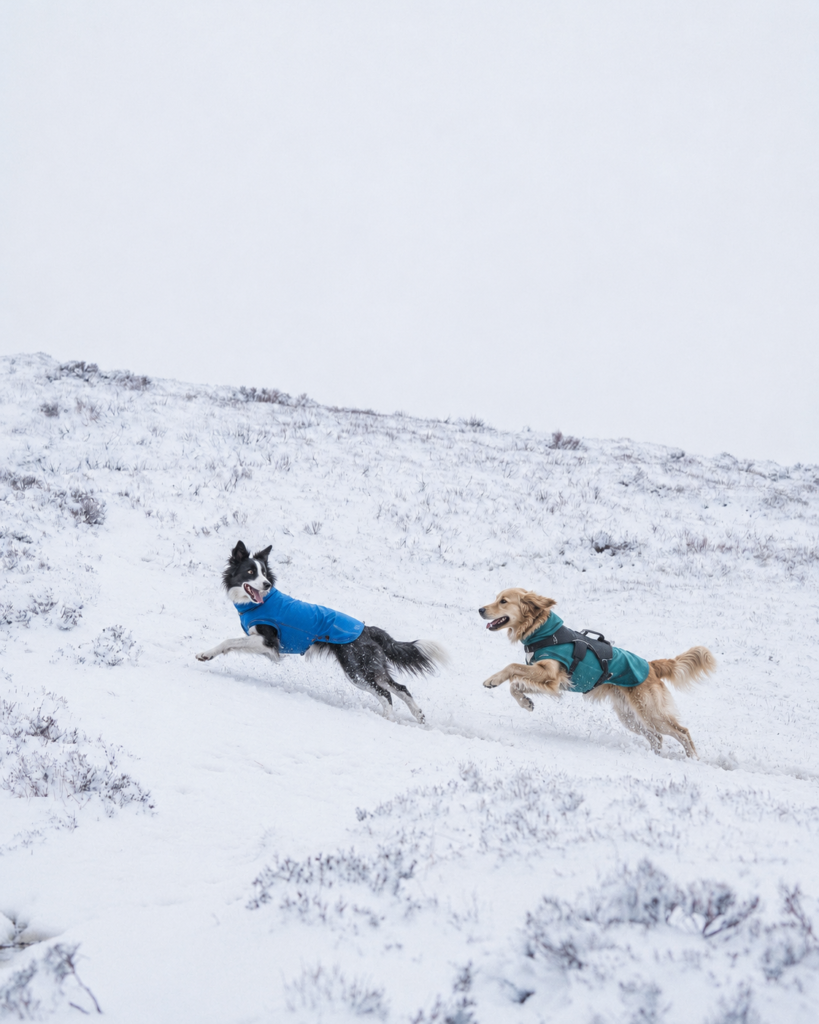
Use the reference photograph to point out the silhouette, neckline, back coverage and harness position you like. Add written specifications and an evaluation plan for the performance you want to offer. The raincoat, softshell and insulated-coat comparison can help you choose the starting construction.
Balance coverage with front-leg movement
The dogs in the image have their front legs extended as they run. For product development, that makes the shoulder, chest panel and front-leg edge useful areas to review. Check how the sample sits when the dog stands, walks, turns and sits, using the intended harness and any underlayer.
- Set back length, neck and chest measurements for the target body shape.
- Check belly clearance and whether the garment rotates or rides forward during movement.
- Review the front-leg edge and seam position through a full stride.
- Record finished-garment measurements and the adjustment range for each sample size.
Use the dog jacket size-chart guide to distinguish body measurements from garment measurements. Confirm the final dimensions on the winter construction with its intended thickness.
Choose the harness arrangement before sampling
The teal jacket is worn underneath a black harness. If that is your preferred arrangement, fit both products together and check the strap path, buckle position and access to adjustment points. If the harness will sit underneath the jacket, specify the leash opening and any protective flap in the pattern.
| Arrangement | Specify in the brief | Check on the fitted sample |
|---|---|---|
| Harness over the jacket | Harness reference, strap path, adjustment range and garment thickness. | Closure access, jacket shifting and the position of seams beneath straps. |
| Harness under the jacket | Harness reference, leash opening dimensions, position and flap construction. | Leash alignment, freedom of movement and coverage around the opening. |
Include the intended harness in fit reviews across the agreed sample sizes. Consolidate photographs, measurements and requested changes in one revision file.
Review the shell, lining and insulation as one assembly
Specify the shell direction, lining feel and any fill distribution before evaluating warmth, weight and bulk. Review a sample made with the proposed material combination, including the closures and edge finishes. Pay particular attention to the neck, chest and areas beneath the harness.
For wet-weather requirements, agree the shell, seams and opening protection alongside the evidence needed for your intended claim. For cold-weather requirements, define the wearing conditions and the agreed evaluation method. Our custom insulated dog coat page covers fill, quilting and padded-sample decisions, while the softshell jacket page focuses on stretch, lining and active fit.
Use a winter-specific sample approval checklist
- Fit and coverage. Record the neck, chest, back and belly dimensions against the approved chart.
- Movement. Review walking, turning and sitting, with attention to the shoulder and front-leg edges.
- Harness use. Check the agreed harness arrangement with the leash attached.
- Openings and closures. Confirm access, alignment, adjustment and the construction around exposure points.
- Materials and care. Match the shell, lining, fill and trims to the approved references, then review the agreed care checks.
- Approval record. Identify the sample version, measurement chart, photographs and any outstanding revisions.
Before bulk production, use the pre-production sample approval checklist to bring the winter-specific comments into the final specification.
Questions from pet brand buyers
Can development start from this type of reference image?
Yes. Mark the design features you want to develop, then add target measurements, activity, material direction and harness requirements. The guide to starting without a tech pack explains how to organize the missing specifications.
Can a winter dog jacket use a softshell construction?
A softshell version can be developed with the agreed backing, lining or insulation. Review stretch, thickness, panel orientation and finished fit together in the first sample.
How should size grading account for the winter construction?
Start with the target body measurements and approve garment dimensions using the intended materials. Review critical neck, chest, closure and harness positions in the agreed sample sizes before confirming grading rules.
Explore insulated dog coats · Plan a 300-piece order · Read more buyer guides